Installing a charging point at home provides real convenience, but the project must be verified before work begins. A good installation does not only depend on the chosen model: it depends on the meter, the electrical panel, the vehicle, the location, and compliance.
Here are the 7 points that MGTEC recommends checking before starting a home charging point installation.
1. Available power at the meter
Before choosing a charging point, you must check the subscribed power and the available margin in the home. If the charger requires too much power compared to other uses, you risk outages or an under-utilised installation.Depending on the need, it may be useful to adapt the subscription or plan for load shedding to better manage consumption.
2. Power accepted by the vehicle
A more powerful charging point does not always charge faster. The vehicle's onboard charger limits the power accepted in alternating current (AC). Before investing in an 11 kW or 22 kW charger, you must check if the vehicle can actually benefit from it.Simple example
If your vehicle limits AC charging to 7.4 kW, a more powerful charging point will not provide the expected gain for domestic use.
If your vehicle limits AC charging to 7.4 kW, a more powerful charging point will not provide the expected gain for domestic use.
3. Condition of the electrical panel
The panel must be able to accommodate a dedicated circuit, suitable protections, and a clean cable run to the charger. The age of the installation, available space, and the quality of the protections are essential points.A charging point must notably have a dedicated 30 mA residual current device (RCD) per charging point, with consistent sizing of the cable and protections.
4. Location of the charging point
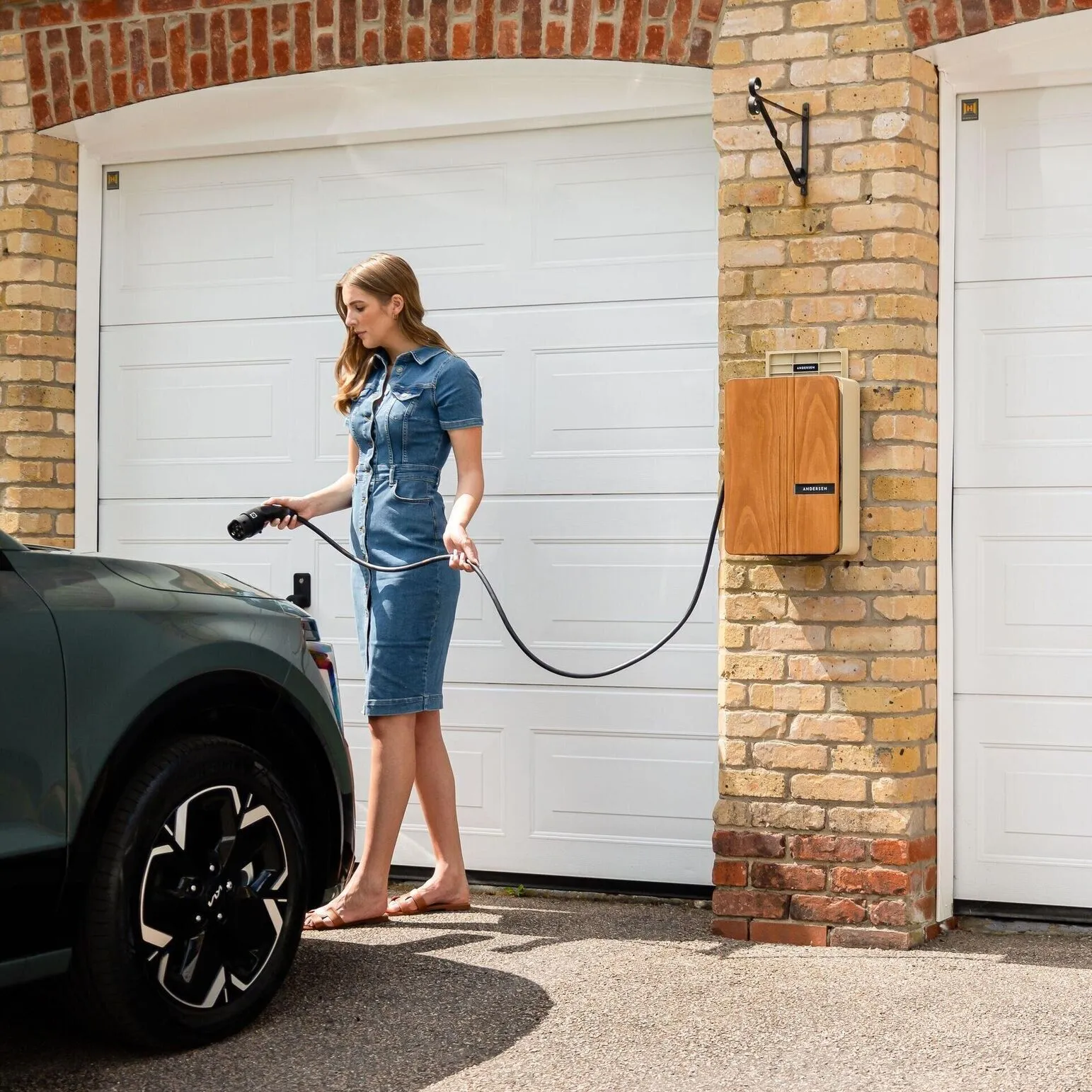
The location must be practical for daily use: proximity to the vehicle, cable length, accessibility, exposure to rain, risk of impact, and ease of maintenance. A good location avoids strained cables, complicated manoeuvres, and maintenance constraints.5. Cable routing
The distance between the panel and the charging point influences installation time, cable choice, drilling requirements, and sometimes the cost. A clean cable run limits losses, protects the installation, and maintains a discreet appearance.6. IRVE qualification and compliance
Depending on the power and context, the intervention of an IRVE-qualified professional is required. This qualification is not an administrative detail: it guarantees that the installation complies with safety requirements and industry best practices.It is also important for the durability of the installation and to avoid difficulties in the event of a claim or inspection.
7. Grants and taxation at the time of the quote
Grants evolve. In 2026, tax credits for new home charging point expenses should no longer be presented as automatic. Reduced VAT may be possible under certain conditions, and some schemes mainly concern collective housing.The correct order is therefore to define a compliant technical solution, then check the applicable grants at the time of the quote.
Why have the project verified by MGTEC?
MGTEC checks technical points before installation: power, panel, protections, routing, location, vehicle usage, and compliance. This approach avoids under-dimensioned installations, overly expensive choices, and unpleasant surprises after fitting.A home charging point must be simple to use, safe, and adapted to your daily life. This is what we aim to guarantee from the very first technical visit.