A feasible project, provided the right topics are addressed
Installing a charging station in a shared building is possible, but it is not the same project as in a detached house. You must take into account the 'right to plug', common areas, the building's electrical capacity, metering, and scalability if other residents wish to equip themselves later.At MGTEC, we approach this type of request with a simple logic: making the file understandable for the co-owner, the property manager, and the residents' committee, while avoiding a fragile installation that is difficult to upgrade.
Right to plug: what you need to understand
The 'right to plug' allows an occupant with a secure private parking space to request the installation of a charging point at their own expense, with individual metering. The co-ownership cannot oppose it without a serious and legitimate reason.In practice, this does not exempt you from preparing a proper file: location, cable routing, protections, access to technical rooms, metering methods, and intervention by a qualified professional. The clearer the file, the smoother the processing by the property manager.
MGTEC Insight
The issue is not just about installing a station. You must show that the installation respects the building, common uses, and electrical safety.
Individual station or shared infrastructure?
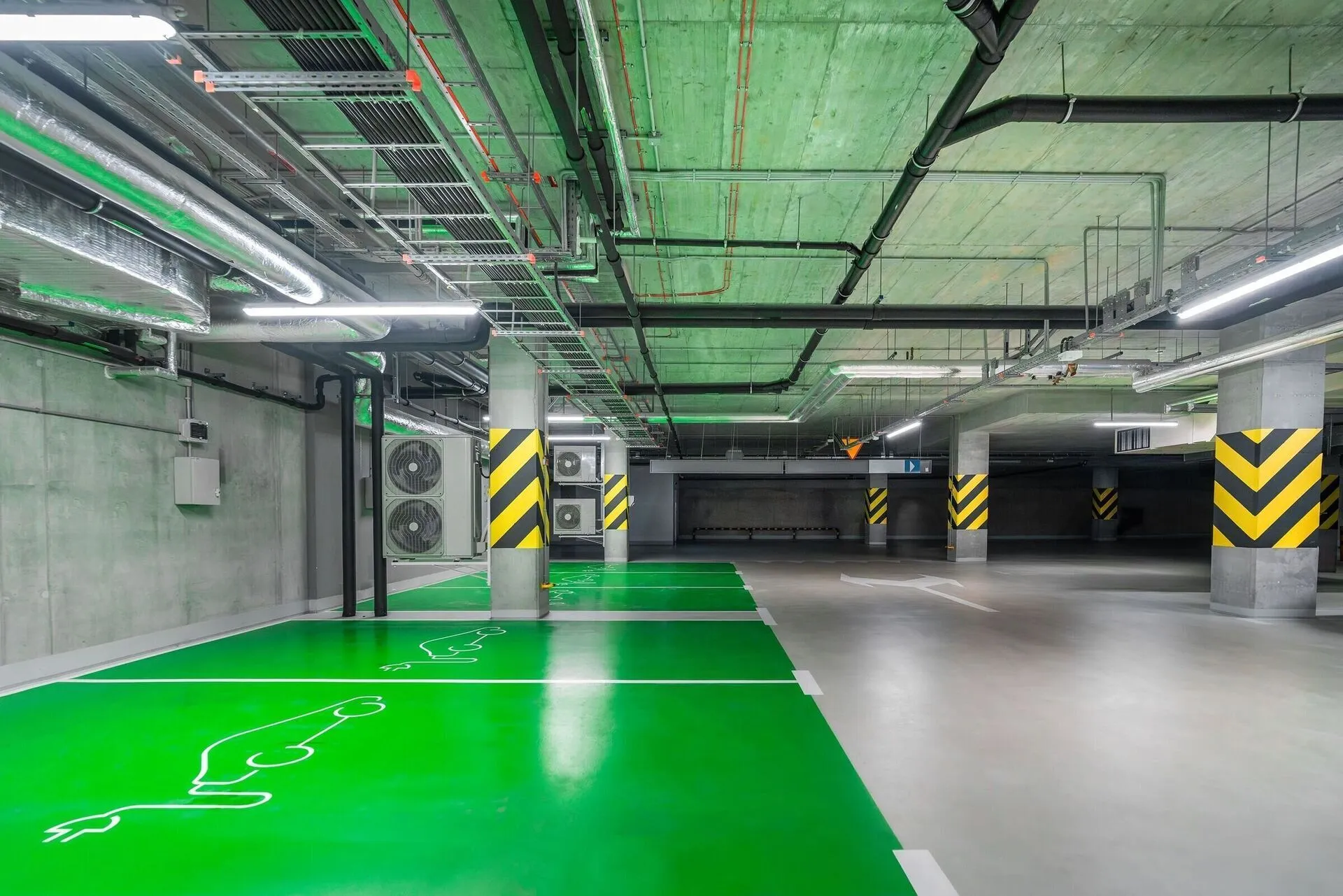
Two approaches are common. The first consists of connecting an individual station for a specific space. It may be suitable for an isolated need, if the routing and metering are simple.The second consists of setting up a shared infrastructure capable of serving several spaces. This solution requires more coordination, but it often becomes more relevant when several residents are interested or when the building wants to anticipate future needs.
- The individual solution responds quickly to a specific request.
- The collective solution facilitates scalability and power management.
- The choice depends on the car park layout, the electrical panel, the number of spaces, and the likely rate of equipment adoption.
What the property manager needs to analyse
A property manager needs concrete information: who is intervening, where the cable runs, how consumption is measured, what protections are planned, who maintains the installation, and how common areas remain accessible.For collective projects, the agreement must also clarify maintenance, inspections, equipment replacement, service continuity, and access to installations. This is an essential point to avoid grey areas once the work is completed.
Grants and funding: caution regarding amounts
The ADVENIR programme may apply to certain projects in collective buildings, but criteria, caps, and scales evolve. It is therefore preferable to check eligibility at the time of the quote rather than relying on an amount read several months prior.Our role is to help you set the right technical scope before seeking funding schemes compatible with the actual situation of the co-ownership.
MGTEC Support
MGTEC can intervene upstream to qualify the need, verify feasibility, prepare useful information for the property manager, and propose a solution adapted to the car park. The goal is to achieve a clean, secure, and scalable installation, without multiple back-and-forth exchanges between the co-owner, property manager, and service provider.Before starting work, we always recommend validating three points: available electrical capacity, the metering solution, and maintenance responsibility. These details often make the difference between an installation accepted on paper and a reliable installation over time.